
Suppliers & materials
Qualified suppliers and reviewed certificates on every lot.
AI reads supplier CoAs, spots recurring off-spec patterns and plans micro-ingredient stock. Check supplier certificates and material identity, weigh every addition to target, and prove each lot meets your customer's specification.
7-day free trial, no card required. Or .

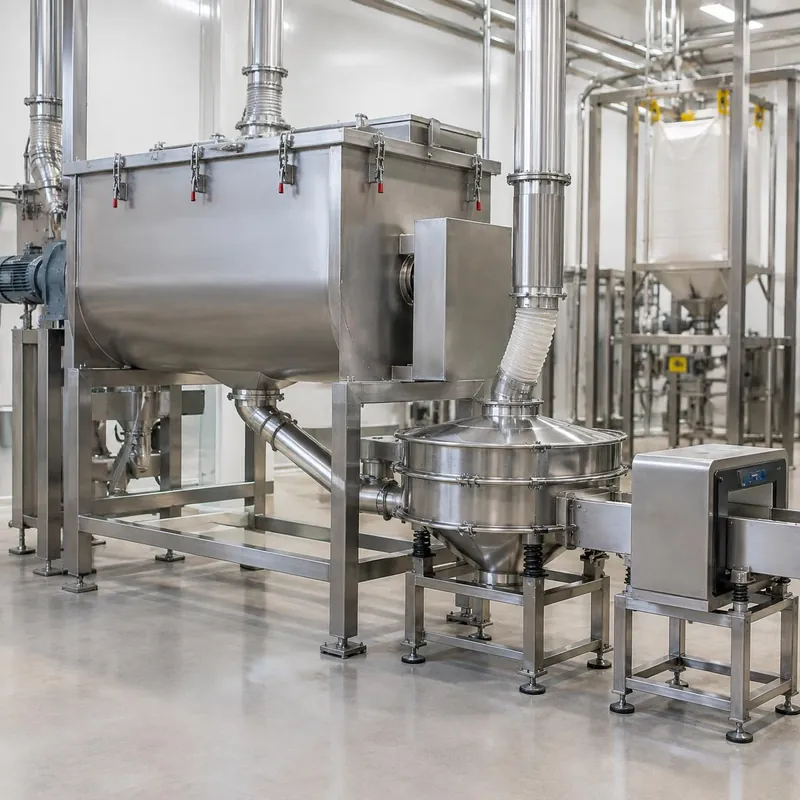

Five reasons not to put it off.
Paper hides blend errors.
A missed addition or unchecked sieve stays buried until a customer complaint.
Add warehouse and quality when you're ready.
Supplier CoA values are extracted for a person to review against your spec.
Small additions are weighed to tight tolerances and scanned by lot.
Additions go in the order and blend time your formula sets.
Sieve inspection and metal detector checks are recorded on the lot.
Results are compared with the customer's spec and a CoA is prepared.
Each record stays linked by lot, for example PP-21877 → DM-3390 → DM-3390-A…B → Customer 17. People make the quality and release decisions; V5 keeps the evidence together. See inventory & traceability
It predicts and flags. Fixed rules decide. People sign.
Predicts demand before it hits.
Forecasts customer demand and tunes reorder points from real consumption.
Suppliers, quality, equipment and customers in the same system as your formulas.
Qualified suppliers and reviewed certificates on every lot.
Results against each customer's spec, with deviations and CAPA.
Blenders, sieves, scales and detectors maintained and measured.
The right formula, a reviewed CoA and trace to every customer.
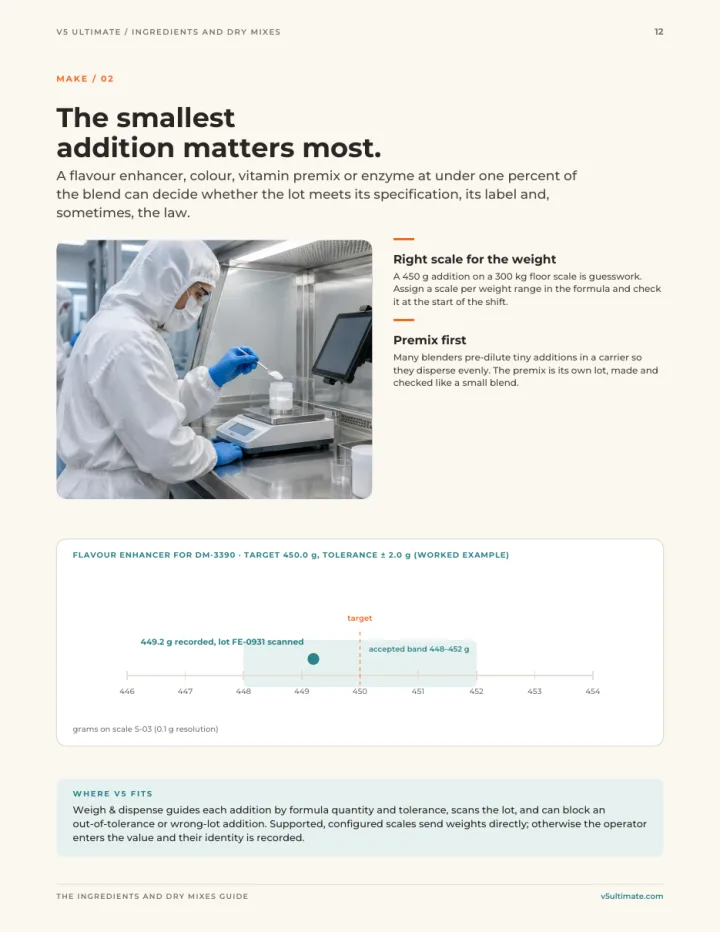
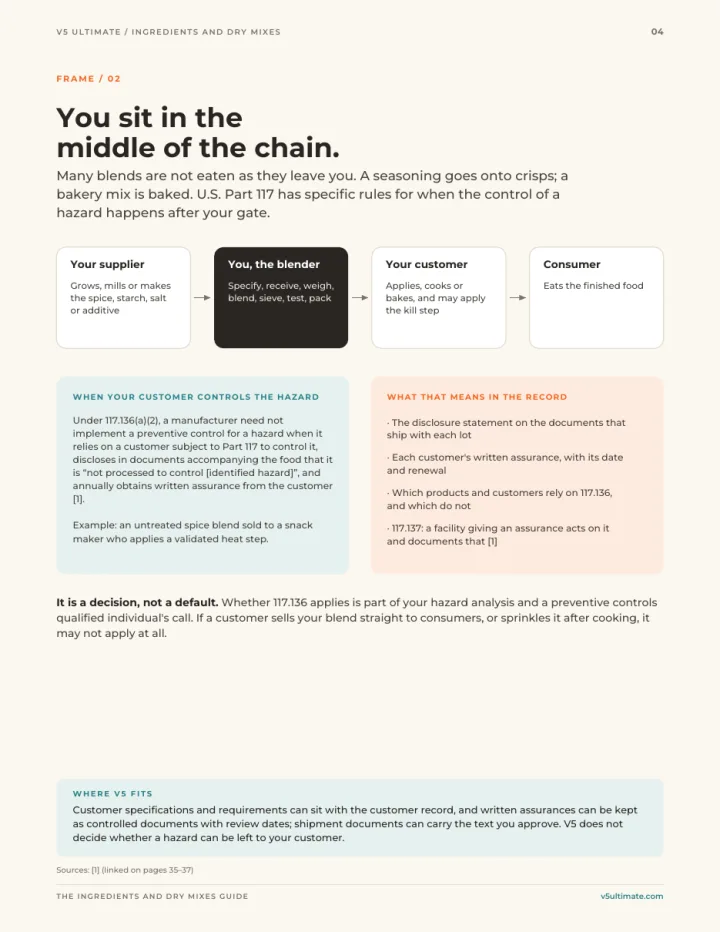
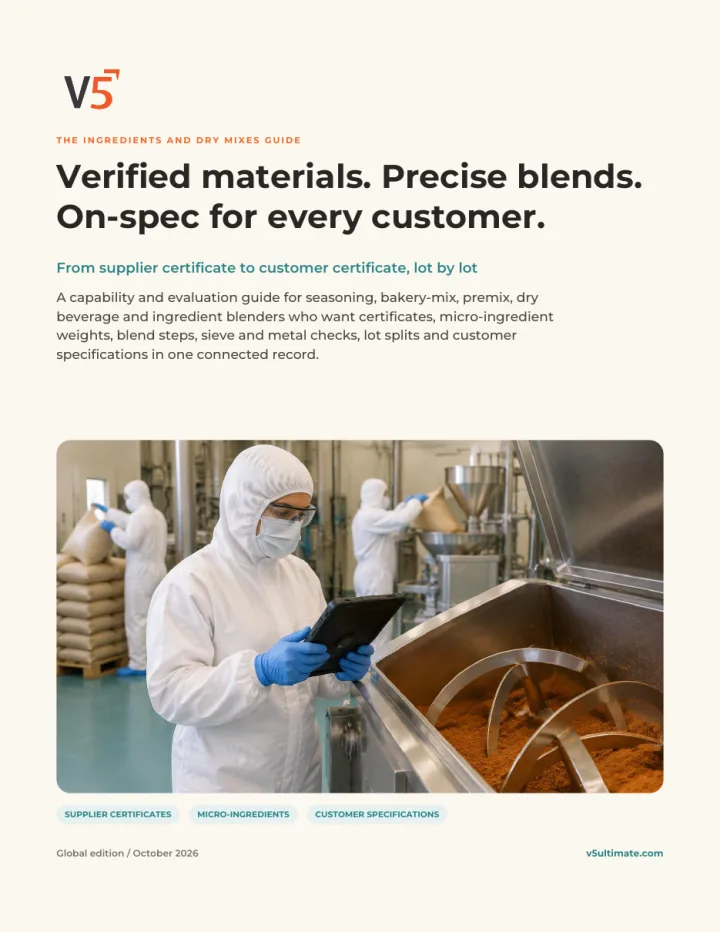
Verified materials. Precise blends. On-spec for every customer.
37 pages · 4 worksheets · 22 primary sources
Free. Just your name and email, and it downloads instantly.
We use your details to handle this request. Privacy policy. Practical orientation, not legal advice; your quality unit decides which rules apply.
Pick a question or write your own. It opens in the assistant for you to edit before sending.
7-day free trial, no card required. No email needed to ask.