
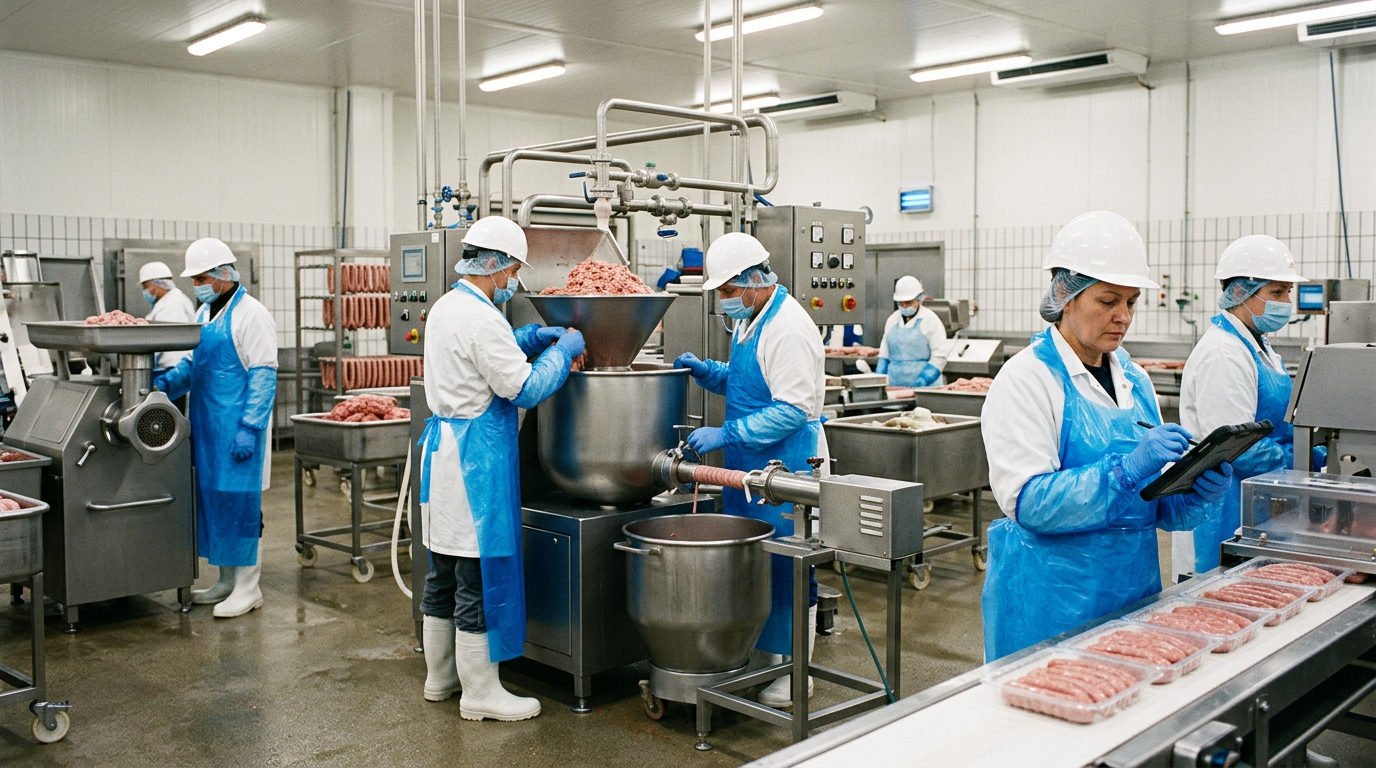
From USDA-tagged trim receipt to sealed retail vac-pack — one FSMA 204-ready batch record with USDA label that matches the bag.
V5 Ultimate runs every step your regulated-manufacturer customers audit — Approved Supplier + FSVP qualification, barcode-scanned receipt of every super-sack, gravimetric dispense against the locked formula, ribbon-blender uniformity, moisture / aw / particle size / micro in the LIMS, per-customer release specs, kosher / halal / organic / non-GMO chain of custody, and an auto-generated current-rev USDA-approved label with safe-handling & Nutrition Facts on the printed USDA label artwork, and a FSMA 204 traceability record ready in seconds. No paper batch sheets, no drift between the label and the batch, no recall panic.
Built for USDA FSIS HACCP, FSIS Directive 7111.1, and lethality validation.
The same batch record — seen the way you run the plant.
For a B2B sausage batch, treat or wet-food maker, the small wins compound with every super-sack. Finance sees higher yield on premium proteins and specialty sausage blends. Operations sees the next changeover clear the allergen and sanitation swab on time. Quality sees a CoA your customer's incoming QA will accept without a phone call.
Higher first-pass yield on premium proteins and specialty sausage blends — dispense drift squeezed, customer rejections killed, and true cost per pack finally on the page.
- Per-batch actual cost: proteins, grains, premixes, packaging, labour and rework — visible in $, today.
- Lower giveaway from gravimetric dispense and in-line fat / lean ratio and pack weight uniformity checks — no over-fill on premium blends.
- Fewer FDA / state feed-control findings from label-vs-batch drift and missing FSMA 204 KDEs.
- Most USDA meat plants see V5 pay back inside year one and keep compounding.
From the FSVP-qualified trim lot to the sealed retail vac-pack & FSMA 204 traceability record — one formula-locked thread.
Follow one blend. Every step below is a single screen in V5 — and the USDA FSIS HACCP, allergen matrix, kosher / halal / organic chain of custody and customer-specific spec library run underneath them all.
Qualified grower, verified trim lot, certification chain intact — before a pound reaches the grinder / stuffer.
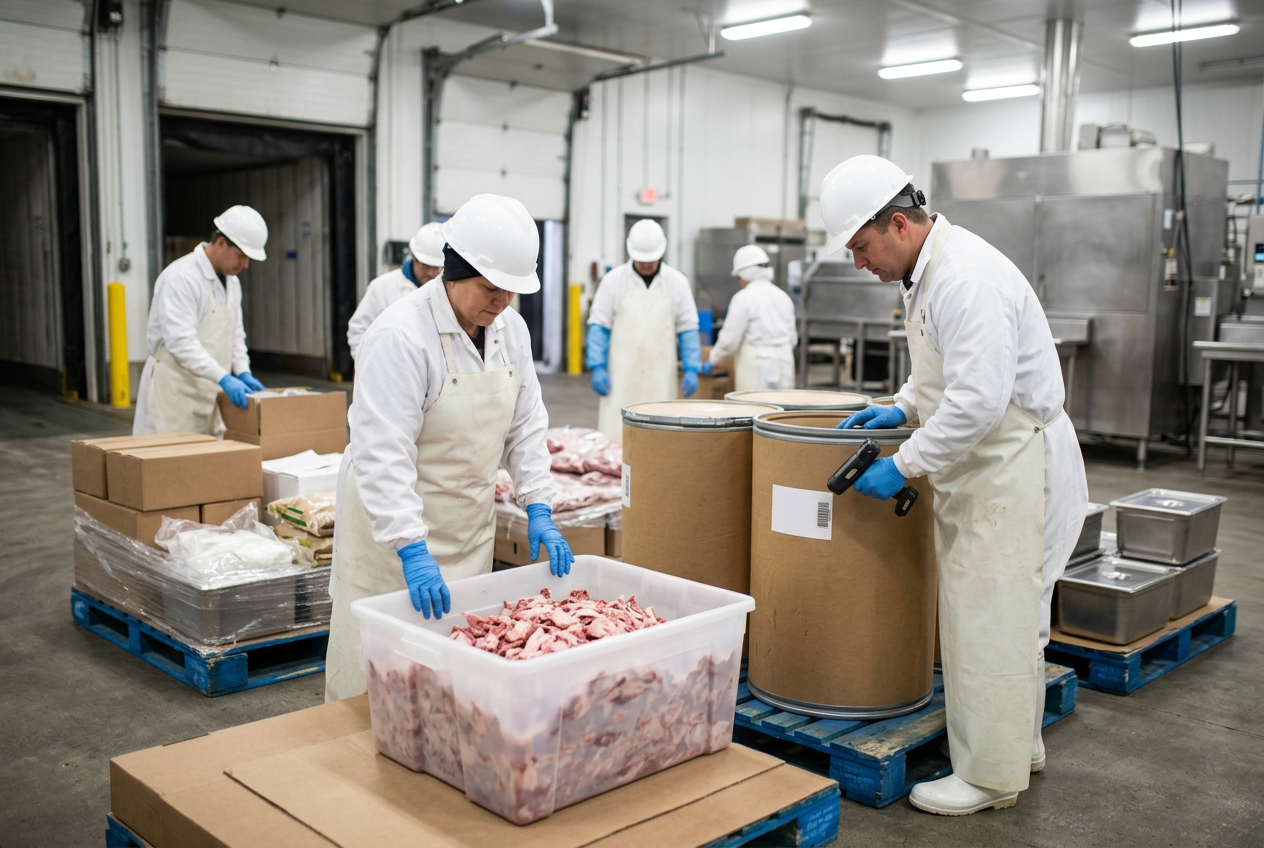
The only formula the line can run is the released, HACCP-approved version — drift from the USDA label spec is physically impossible.
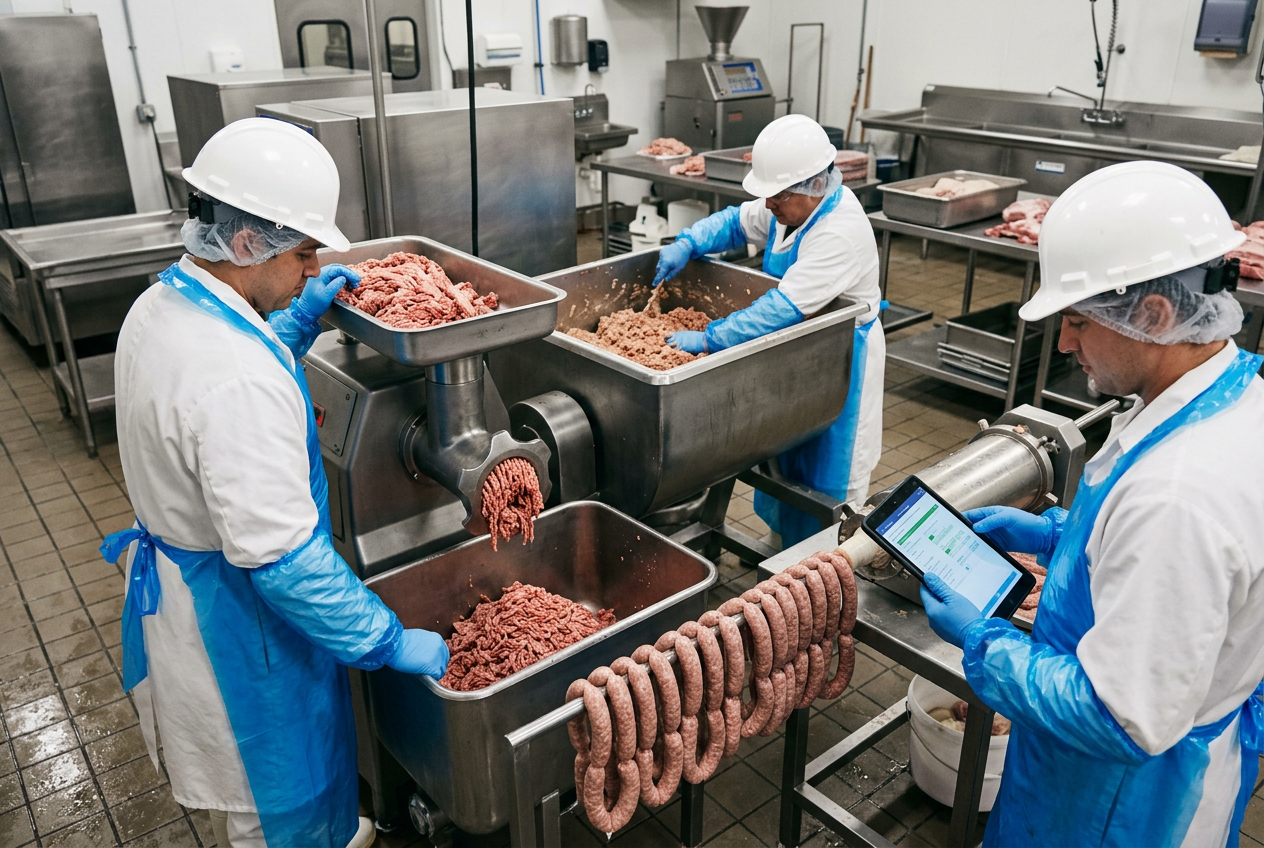
The batch can't ship until every USDA label attribute is green — and the reviewer sees every OOS in one place.
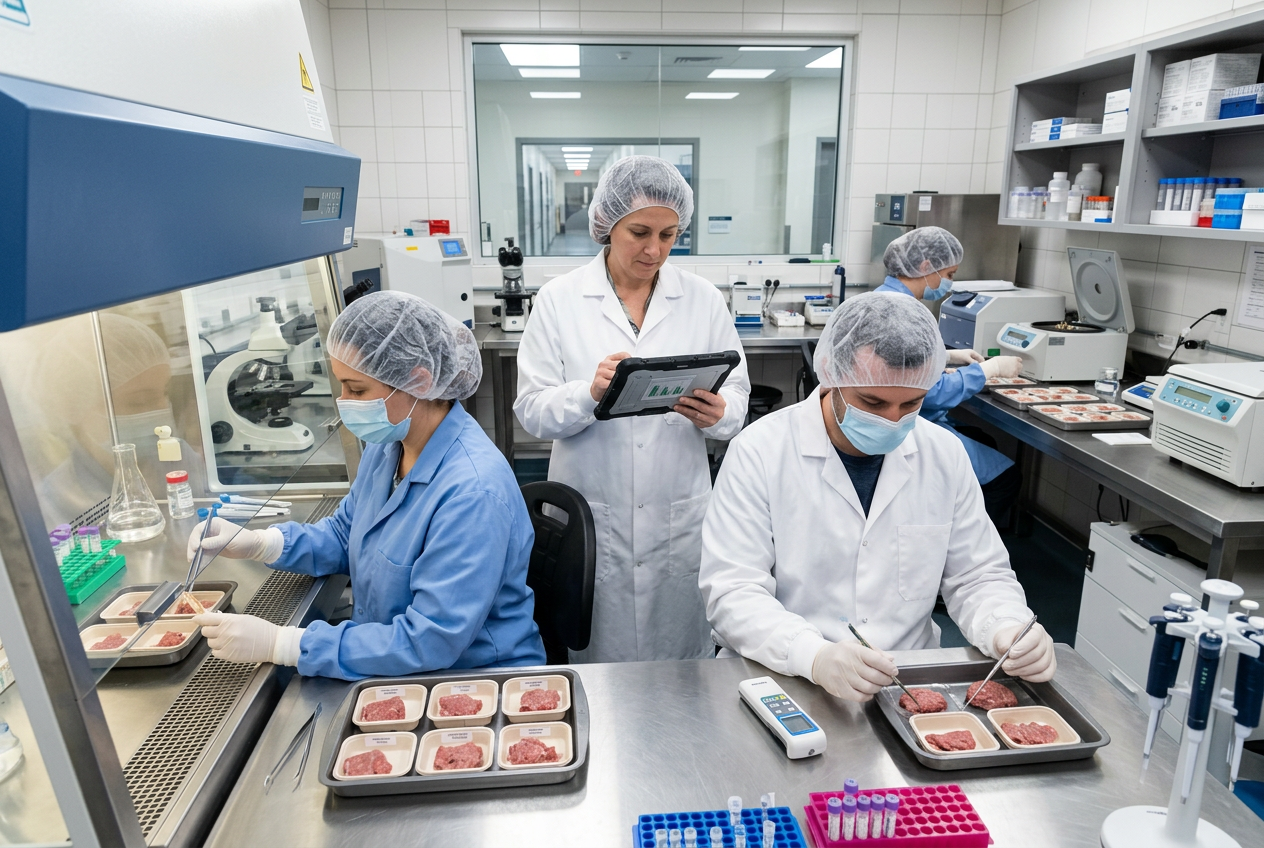
One finished batch, one current-rev USDA label, one QA-signed bag — no drift between the bag and the batch.
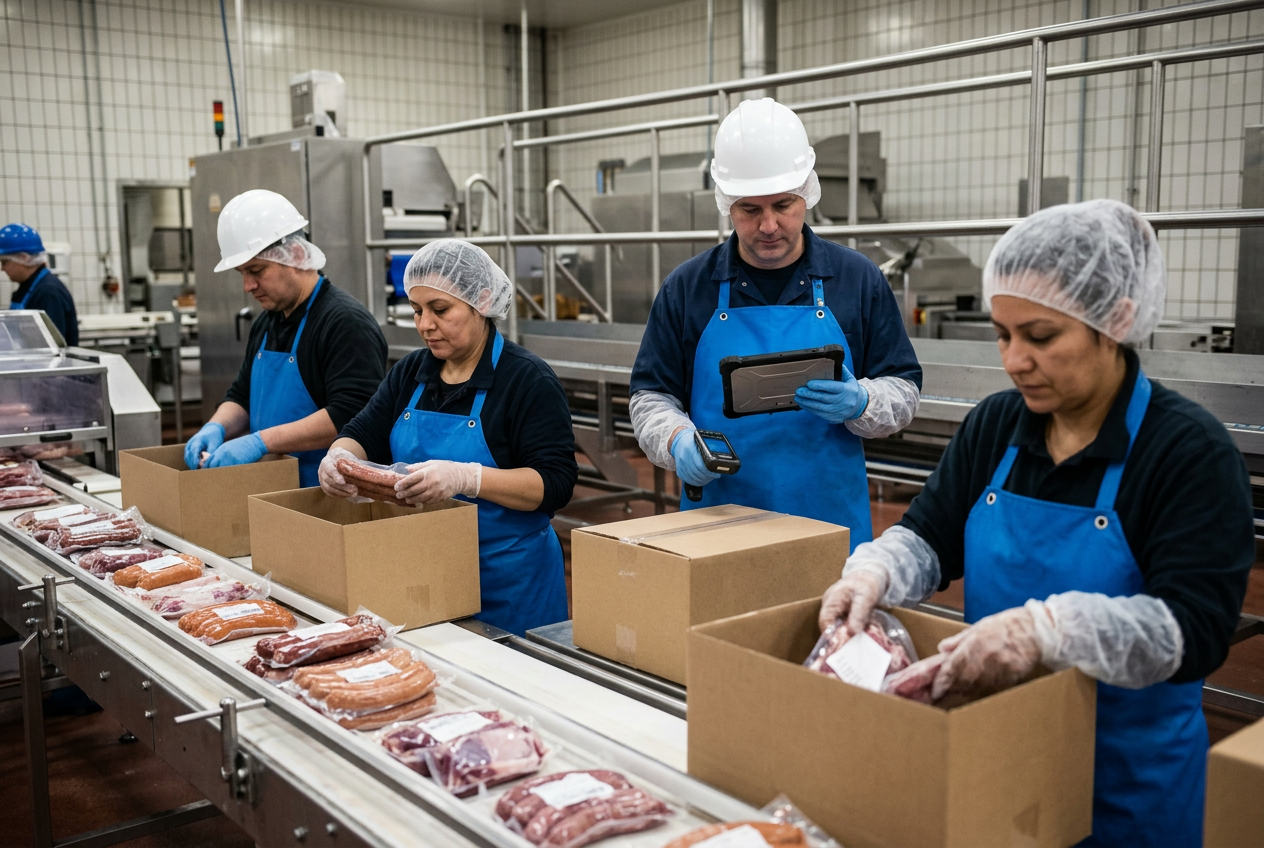
"If a supplier just flagged E. coli O157:H7 — which retailers, DCs and e-commerce FCs are exposed?"
Every pallet ships with the batch record, GS1-128 SSCC, chain-of-custody marks and a pack manifest tied to the released blend lot. When a supplier flag, a customer complaint or an USDA FSIS HACCP event triggers a stop-sale, V5's lot + pack tree paints the affected bag ranges and destinations — forward from the finished blend and backward to every input powder, premix, flavour and packaging lot that built it. A CoA retraction with the recall-notice pack drafts itself.
A supplier confirms E. coli O157:H7 on romaine leaf lot CM-6640. V5 walks the tree — the finished bratwurst and deli ham batches that used it, the pack ranges dispatched, the retail DCs, foodservice DCs and independent butchers exposed. Pull the lever to see the FSMA 204 sortable spreadsheet assemble itself.
Grinder / stuffer PM, grinder verification, dust collection & Master Sanitation Schedule — on the same tablet as production.
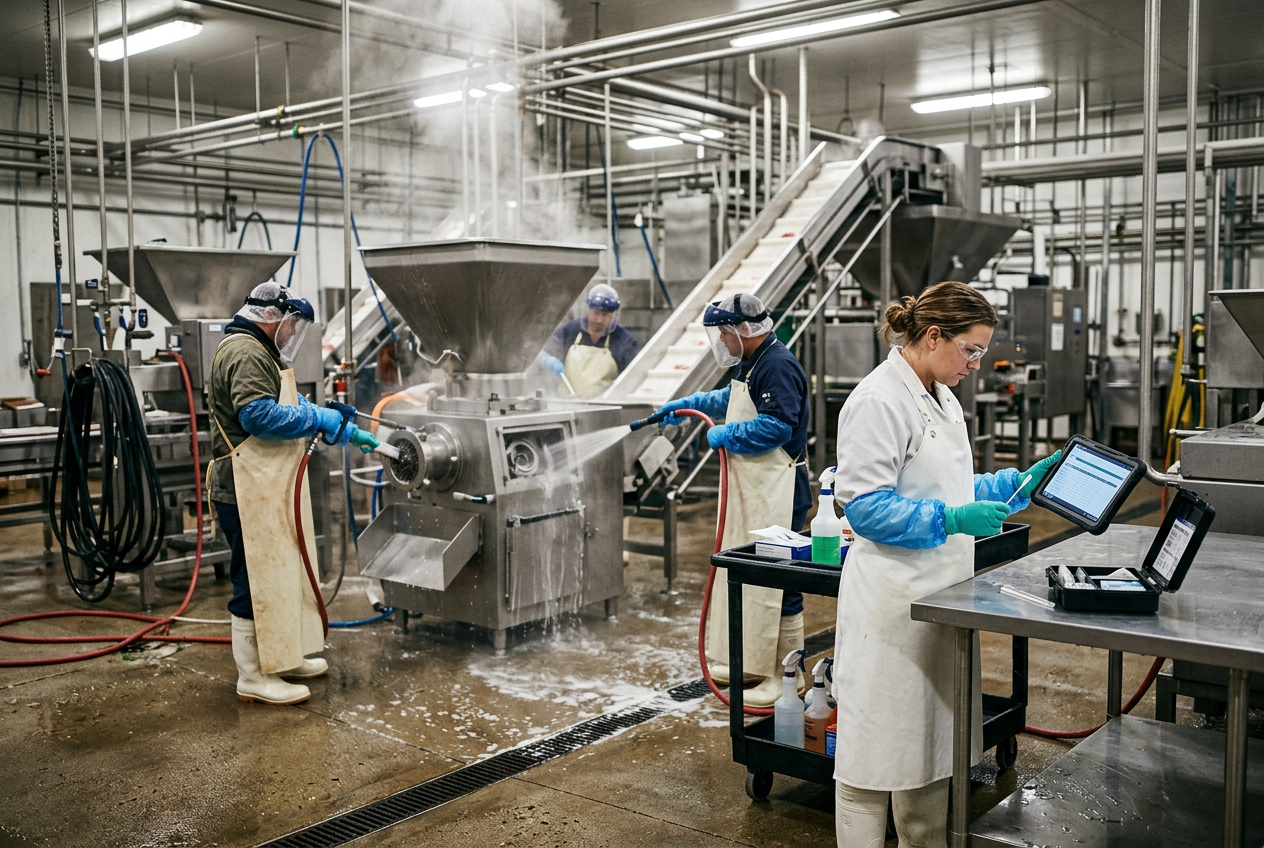
Quality, FSMA FSIS HACCP + SSOP and USDA label control run through every batch — not stapled to the record at the end.
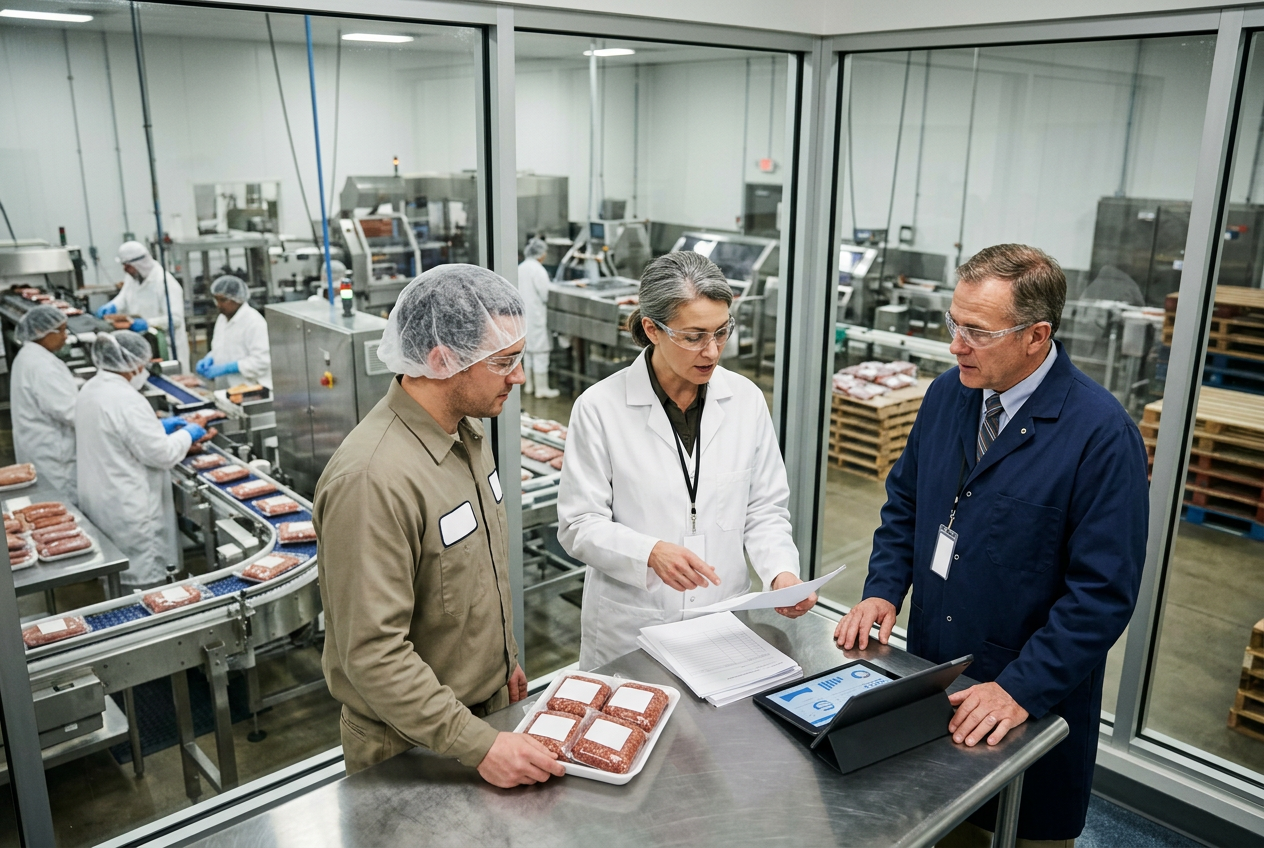
Every quality feature in V5 — mapped to a USDA-inspected meat processor.
The same platform that runs pharmaceuticals and human food — set up for the way a meat processor actually receives, preconditions, extrudes, smokes and cooks, tests, bags-off and releases a batch under 9 CFR 417, FSMA 204, FSVP, USDA FSIS Model Regulations and GFSI (SQF, BRCGS, FSSC 22000).
Approved Supplier Program & FSVP
Configurable per powder, premix, flavour and pack. CoA + FSVP + kosher / halal / organic verified at receipt; expired qualification blocks goods-in automatically.
Gravimetric dispense & uniformity
Loss-in-weight feeders and gravimetric dispense verify each protein and cure ingredient to the gram and blend ratio. Fat / lean and pack weight uniformity samples pull along the product stream — an OOS uniformity opens a deviation.
Two-signature release
Production + QA review-and-release before any blend ships. Every gate signed with a validated e-signature — identity + meaning captured.
Deviation, complaint & customer feedback
One workflow from issue raised through root cause, action, verification and close. Linked to the affected blend, workstation, operator, supplier and customer — customer complaint routes to the correct account team.
Formula & USDA label lockdown
Formulas are immutable, rev-locked and tied to the current-rev USDA-approved label with safe-handling & Nutrition Facts. The printed USDA label artwork engine refuses to render a superseded GA — the line cannot bag with an out-of-date label.
Supplier scorecards & re-qualification
On-time delivery, CoA quality, FSVP status, GFSI certification, deviation rate and audit findings rolled into a live supplier score. Expired qualifications block goods-in automatically.
Organic, non-GMO, grain-free & humanely-raised chain of custody
Certification and marketing claims (Organic 7 CFR 205, non-GMO Project, grain-free, humanely raised) carried lot-by-lot from receiving through grind & mix, coating, packaging and shipping — with mass-balance evidence enforced at each step.
USDA label proofing & guaranteed-analysis roll-up
V5 rolls up the batch's proximate, vitamin and mineral results into the printed bag's USDA-approved label with safe-handling & Nutrition Facts. A GA drift triggers a re-approved label proof before the next bag can print.
Retain samples & stability
Retain samples booked into the retain library per lot with location, disposition and expiry. Stability studies scheduled per blend and pack — appearance, moisture, aw, assay and micro pull-points tied to formulation.
Live on your grinder / stuffer lines, feeders, smokehouses and packaging lines — no rip-and-replace.
We connect at the level your engineers and QA team expect — OPC UA, Modbus, MQTT, REST, EDI, file drops, SQL. Most plants are live on day one with the grinder / stuffer lines, smokehouses, coating drums, gravimetric feeders, sifters, metal detectors, checkweigher + X-rays, vacuum packagers and vacuum packagers and packaging lines already installed.
Grind & mix, dispense & grinding
OPC UA and Modbus links to Wenger, Bühler, Clextral, Extru-Tech grinder + mixer + stuffer lines and sort tables; K-Tron, Coperion, Schenck, Acrison loss-in-weight and gravimetric feeders; Bühler and CPM bandsaws; Sweco and Russell Finex sifters. Screw speed, barrel temperature, moisture, SME and dispensed mass logged straight to the batch.
Magnets, metal detect & checkweigh
Bunting and Eriez magnets; Mettler-Toledo Safeline, Loma, Anritsu, Ishida metal detectors and checkweigher + X-rays. Reject events, test-piece verifications and giveaway data streamed to the batch — a failed verification hard-stops the line.
Bag-off, FIBC fill & label
Concetti, Premier Tech, Haver & Boecker, Choice Bagging vacuum-pack and FIBC fillers; Videojet, Domino, Markem-Imaje, Zebra thermal-transfer and print-and-apply labellers. Current-rev USDA FSIS guaranteed-analysis bag artwork and lot code pinned per pack at the line.
Lab instruments & LIMS
NIR, HPLC, FTIR, ICP-MS, LC-MS/MS, moisture analyzer, aw meter, bomb calorimeter, sausage batch hardness tester, texture analyzer. Direct connectors for Waters, Agilent, Thermo Scientific, PerkinElmer, Mettler-Toledo, HunterLab and Malvern Panalytical.
ERP, WMS & customer portals
SAP, NetSuite, Microsoft Dynamics 365, Oracle, Infor, JustFood, Aptean. Retailer EDI (Sysco, US Foods, Kroger, Walmart, Amazon Fresh), ASN and FSMA 204 traceability exports per retailer preference — email, SFTP, portal upload or API.
BI & data warehouse
Power BI, Tableau, Looker, Snowflake, Databricks. Direct SQL access to your tenant — your data, your queries, your validated reports.
9 CFR 417, FSMA 204, USDA FSIS & GFSI — at the data layer.
The records build themselves as the blend is executed. When the FDA FSMA inspector, an SQF / BRCGS / FSSC 22000 auditor or a state feed control official walks in, the evidence pack is one click — not a week of re-assembly.
Fixed-price, named team, one product family live before you pay for the next.
- Week 1–4·step 01Discovery & floor scan
We walk one product family with your team — formulas, USDA-approved label with safe-handling & Nutrition Facts library, printed USDA label artwork, allergen matrix, organic / non-GMO / humane certifications, existing ERP and WMS fields. Out: a fixed scope and price.
- Week 5–9·step 02Configure & integrate
Material master, formulas, USDA label per SKU, LIMS methods (proximate, veterinary drug residue, vitamin/mineral assay, pathogen), printed USDA label artwork templates, grinder / stuffer / dryer / smokehouse / feeder / metal-detector / vacuum-pack integrations and ERP feeds loaded.
- Week 10–13·step 03Pilot & train
One product family live in pilot. Three-shift operator training on the floor with the actual UI — not slides. UAT signed by QA, production and operations.
- Week 14–16·step 04Go live & hyper-care
Cut over. Two weeks of hyper-care with your named delivery team on-site. KPIs published on the wall before we leave.
The first six questions on every sausage & meat RFP.
How does V5 keep the USDA-approved label with safe-handling & Nutrition Facts on the bag in sync with the batch actually made?
How does V5 handle USDA FSIS HACCP and FSVP for imported ingredients?
How does V5 handle FSMA 204 traceability KDEs and CTEs for a sausage & meat lot?
Will V5 talk to our grinder / stuffer lines, smokehouses, smokehouses, metal detectors and packaging lines?
We contract-manufacture private-label sausage & meat for multiple brands on one line — how does V5 keep them separate?
What about IT — validated change control, SOC 2 and GFSI / certifying-body audit prep?
Book a 30-minute walkthrough with a meat & sausage specialist.
We'll show a live self-building batch record, formula lockdown, gravimetric dispense and smokehouse-parameter capture (time, dry-bulb, wet-bulb, IT), pH / aw / nitrite / Salmonella / E. coli O157:H7 / Listeria / STEC in the LIMS, two-signature release, current-rev USDA label lockdown at vacuum-pack and a mock supplier E. coli O157:H7 traceback — on a workspace seeded for a working USDA meat plant.
Fixed-price go-live · No platform lock-in · Onboard in 10–16 weeks