
See what is open on a lot, then a person decides.
The review starts from exceptions: open deviations, holds, missing sign-offs and results. A person signs release or hold.
7-day free trial, no card required. Every plan has a QA release queue. Signed decisions and linked deviations need Professional or Enterprise.

Start from what is open.
Open deviations, holds, missing sign-offs and pending results are gathered for the reviewer.
A signed decision with a reason.
Release or hold is recorded by a person, with the reason and signature on the lot.
The warehouse sees the outcome.
The lot's status follows the decision, so held stock is clear to everyone.
Follow one release review
Read the exceptions, then sign the decision
Try it: open both exceptions. The decision buttons unlock once you have read them.
- Batch recordAll 9 steps recorded
- Exception 1Cap torque re-check at 10:12
- Exception 2DEV-1150 · closed
- Stage sign-offs3 of 3 signed
- Lab resultsReviewed · within limits
FG-4471 stays in quarantine until a person records release or hold. Start with the exceptions.
0 of 2 exceptions read. V5 never releases on its own.
Worked example. Electronic signatures with meaning are Professional and Enterprise.
How release review works: queue, open items, decision and status
Tap a step below to see what happens.Choose a step below to see what happens.
Step 1 of 4
- FG-4471 · Product B2 exceptions
- FG-4468 · Product ANo exceptions
- FG-4465 · Product CResults pending
- Status of all threeQuarantine until decided
Lots stay in quarantine until a person records a decision.
Finished lots wait for review
- Completed work orders arrive in the QA queue with their lot, product and exception count.
- Lots stay unavailable for shipping until someone records a decision.
The QA release queue is in every plan.
More on queue: full record and set-up
Also on this record
- Oldest
- FG-4465 · 2 days
Planners can see which lots are waiting, released or on hold.
- Stage reviews
- Supervisors can sign each stage so the reviewer sees which stages are complete.
- Pending results
- Where lab testing is set up in V5, pending results show on the lot. Lab & QC is Enterprise.
Quality Evidence & Management Review Buyer Guide
For quality teams evaluating how lab results, release decisions, supplier evidence and reviews connect.
- 1See where the release boundary sits.
- 2Handle out-of-spec results before review.
- 3Test release review on one of your lots.
We ask for your name and email so we can handle this request. The PDF downloads in your browser. Privacy policy
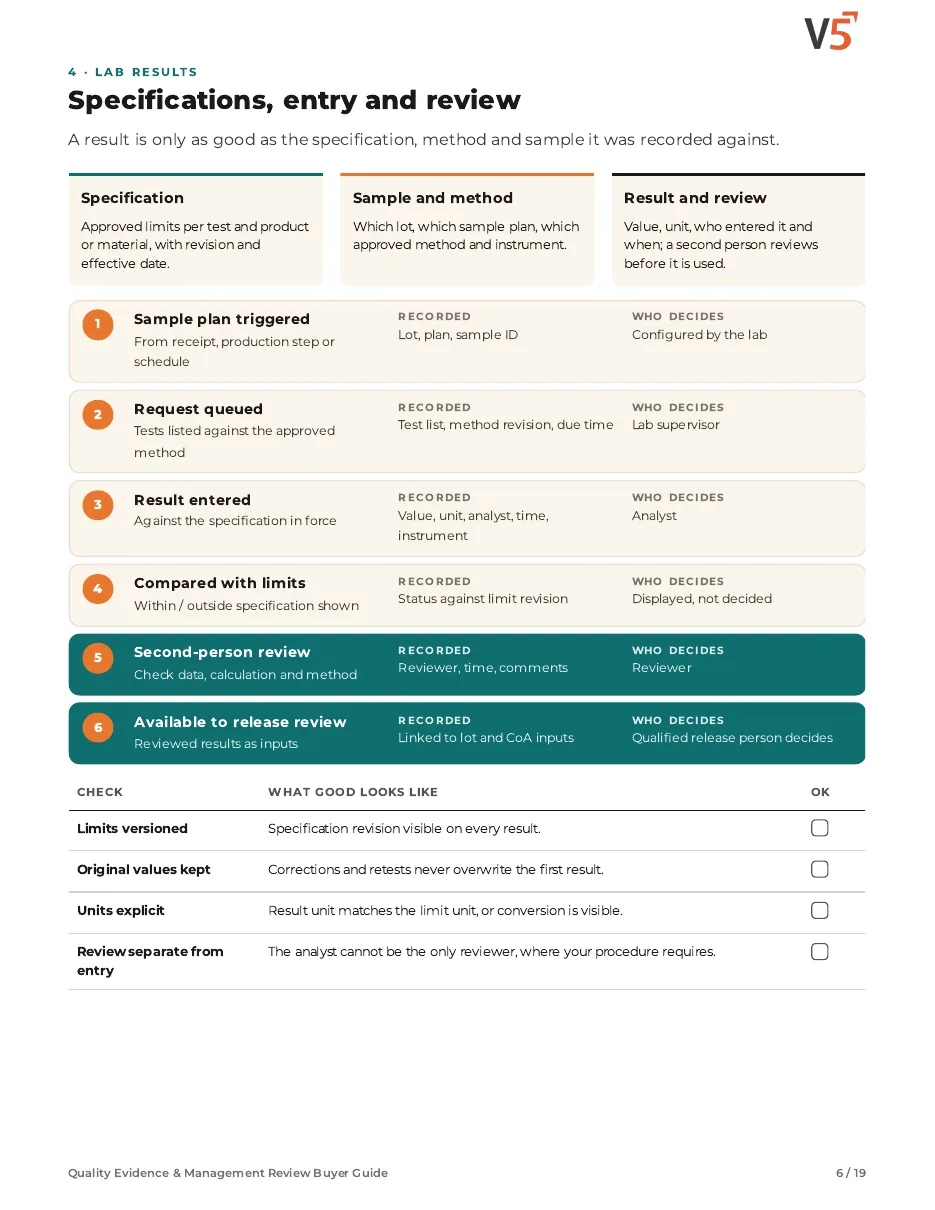
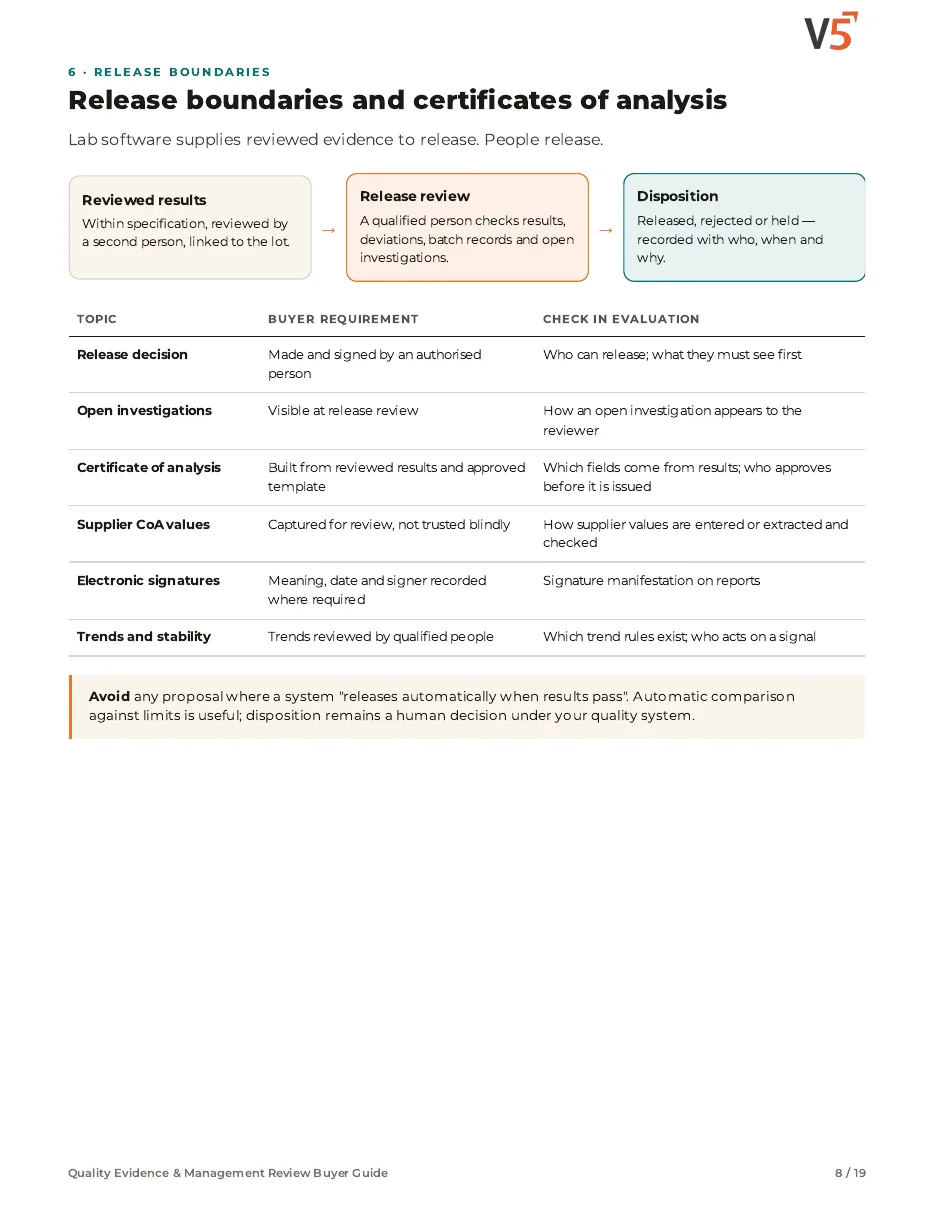
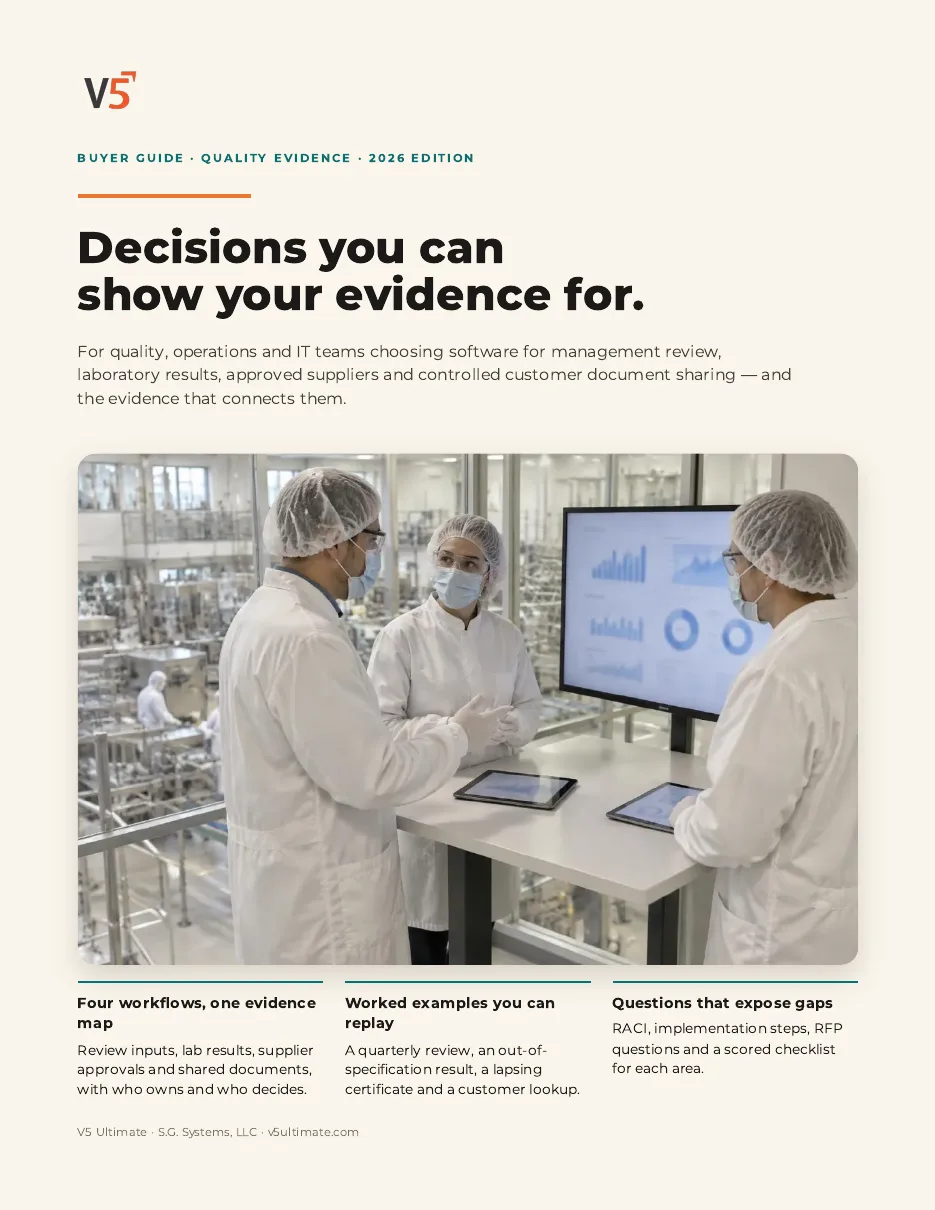
Release built on records that already exist
The review uses the batch record, deviations, CAPAs and lab results already in V5, so nothing is gathered by hand at the end.
Everything in this feature
What release review includes, and which plan each item needs. Compare plans
Review
Everything the reviewer needs on one lot.
QA release queue · Lots and traceability · Basic reports
Explore review
Review
Everything the reviewer needs on one lot.
QA release queue · Lots and traceability · Basic reports
- QA release queueFinished work waits for a person's decision.
- Lots and traceabilityLot status, holds and where each lot went.
- Basic reportsStandard PDF reports.
- Deviation managementProfessional and EnterpriseLinked deviations with status and impact.
- Regulated reportsProfessional and EnterpriseBatch record, device history record, MMR and certificate of analysis.
- Lab & QCEnterpriseSamples, results and review feeding the release.
Decision and record
Signed by a person, kept with the lot.
Electronic signatures · Tamper-evident audit trail · SMS notifications
Explore decisions
Decision and record
Signed by a person, kept with the lot.
Electronic signatures · Tamper-evident audit trail · SMS notifications
- Electronic signaturesProfessional and EnterpriseSignatures with meaning, designed for 21 CFR Part 11.
- Tamper-evident audit trailProfessional and EnterpriseDesigned for ALCOA+ data integrity.
- SMS notificationsText alerts for deviations and releases.
- Customer portalProfessional and EnterpriseOrders, lot trace and documents for customers.
Release and hold are always recorded by a person under your procedures. V5 does not by itself make you compliant or validated.
AI that sees it coming
It predicts and flags. Fixed rules decide. People sign.
See the next issue coming.
AI reviews deviation and complaint history to show where problems are building.
Straight answers.
What buyers ask us first about Quality & Laboratory.
Does V5 release product automatically?
No. V5 gathers results and records for review, but a person in quality decides and signs the release.
What does the lab side cover?
Lab and QC covers sampling, instruments, methods, results and out-of-spec handling, with LIMS, lab notebook, stability and SPC on top. These are Enterprise features; see Compare details on the pricing page.
Can we use V5 in a validated environment?
For validation-controlled operations, V5's route is Enterprise private cloud with controlled upgrades and IQ/OQ support. Your team still validates V5 for its intended use.
More of the product
Start with one area. Add the rest when you are ready.
 Warehouse & TraceabilityExplore
  Production & PlanningExplore
  This feature's areaQuality & LaboratoryExplore
  Documents & TrainingExplore
 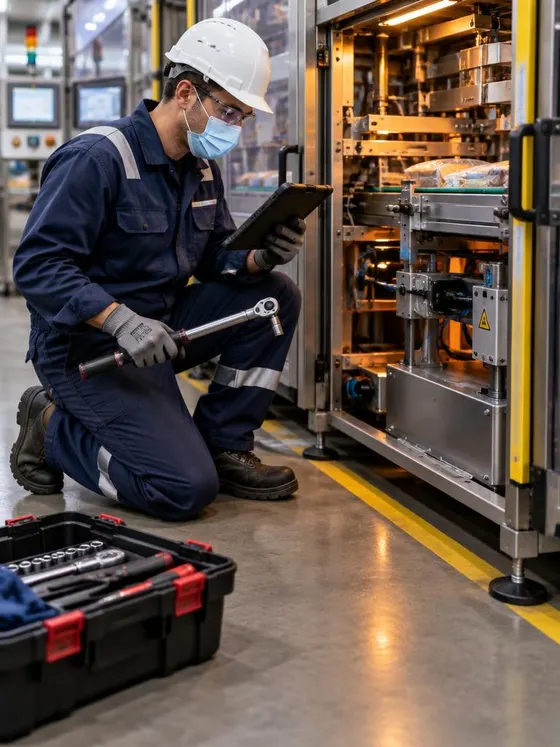 Equipment & PerformanceExplore
  Orders & IntegrationsExplore
Try a release review on one of your own lots.
Start a free trial or talk it through with us. No card needed.